As tree professionals serving homeowners across central North Carolina, one of the most common questions we hear is:
“Do I really need to remove this tree, or can it wait?”
The honest answer? Some tree issues can be monitored. Others are serious safety hazards that should be addressed right away.
Trees add beauty, shade, and value to your property. But when a tree becomes structurally unstable or diseased beyond recovery, it can pose a real risk to your home, vehicles, and family.
Here are five warning signs we look for during professional evaluations that may indicate immediate removal is necessary.
1. The Tree Has Developed a Sudden Lean
Not all leaning trees are dangerous. Some naturally grow at a slight angle.
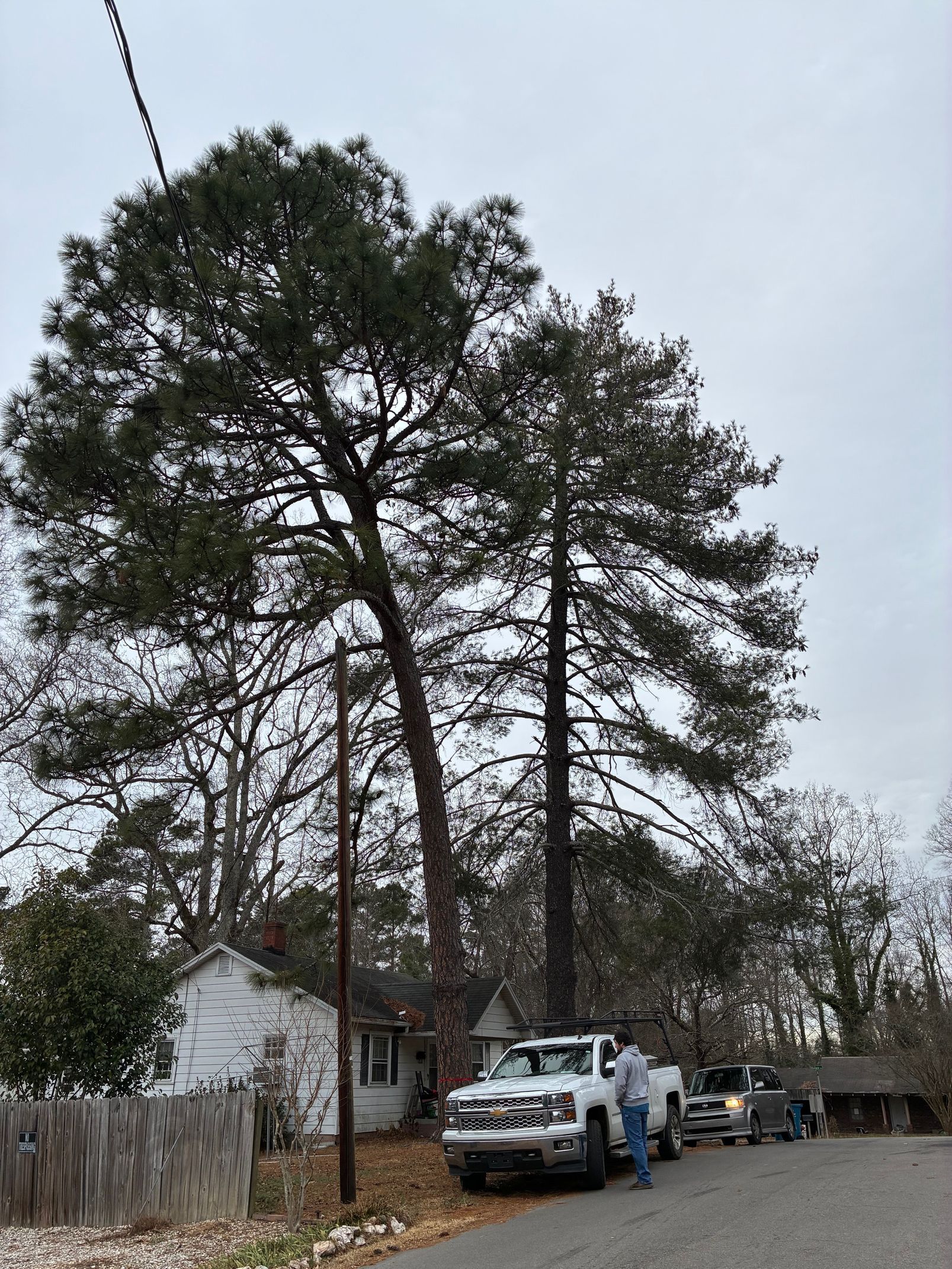
What concerns us is a
new or worsening lean, especially after a storm.
Warning signs include:
- Soil lifting or cracking around the base
- Exposed or shifting roots
- A lean toward your house, driveway, or power lines
- The tree previously stood upright
A sudden lean often indicates root failure. When the root system loses stability, the tree can fall with little warning, especially during heavy rain or high winds.
If you notice movement in the root plate, that’s not something to ignore.
2. Large Dead or Hanging Limbs in the Upper Canopy
Dead limbs are not just cosmetic issues they are falling hazards.
We pay close attention to:
- Large branches with no leaves during growing season
- Limbs with bark falling off
- Cracks where branches meet the trunk
- Heavy limbs hanging over structures
In North Carolina’s storm-prone climate, high winds frequently bring down dead wood. If a tree has significant canopy dieback,
removal may be safer than attempting aggressive pruning.
Safety always outweighs sentiment.
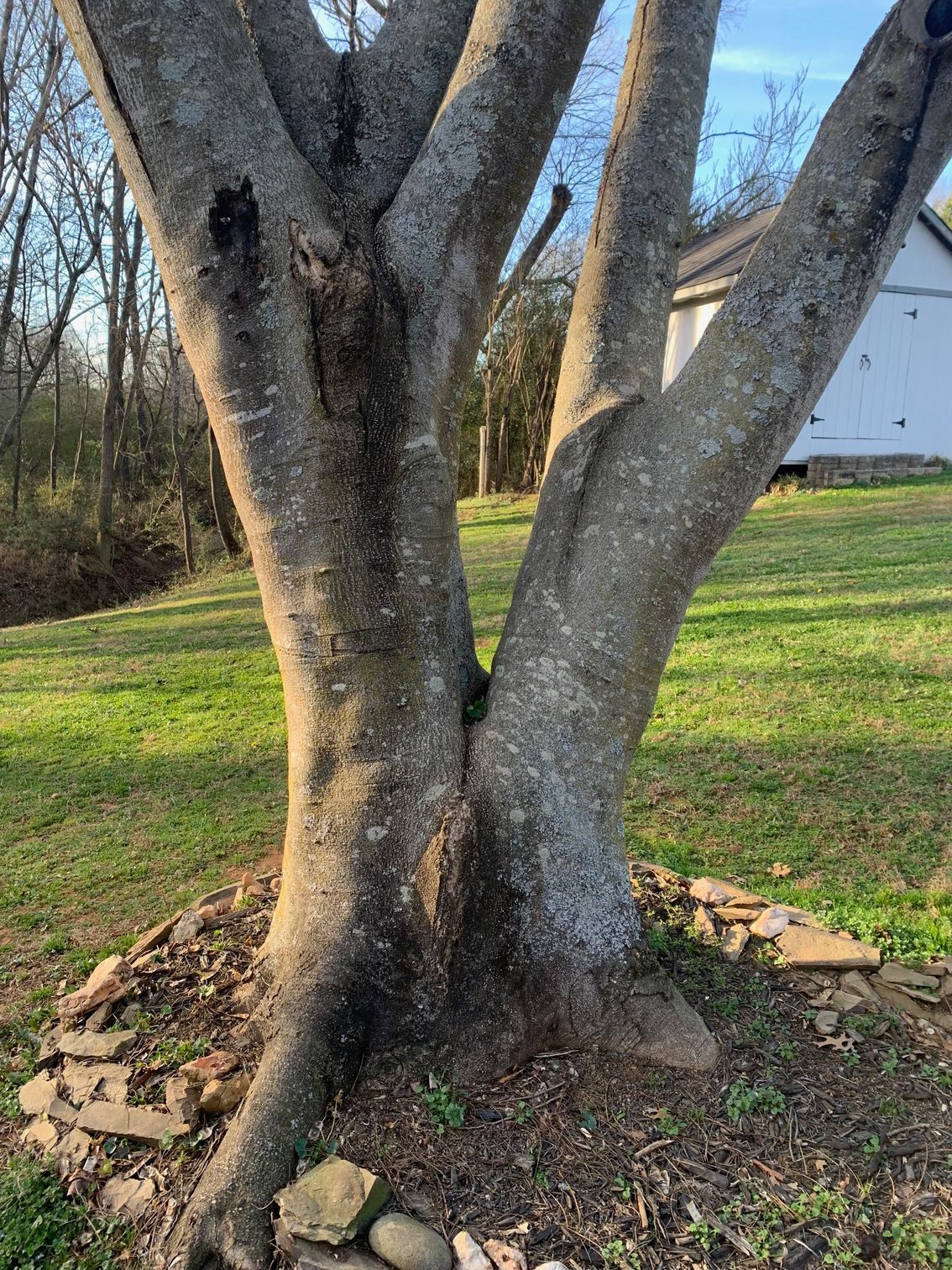
3. Deep Cracks, Cavities, or Trunk Splits
The trunk is the structural core of the tree.
Red flags include:
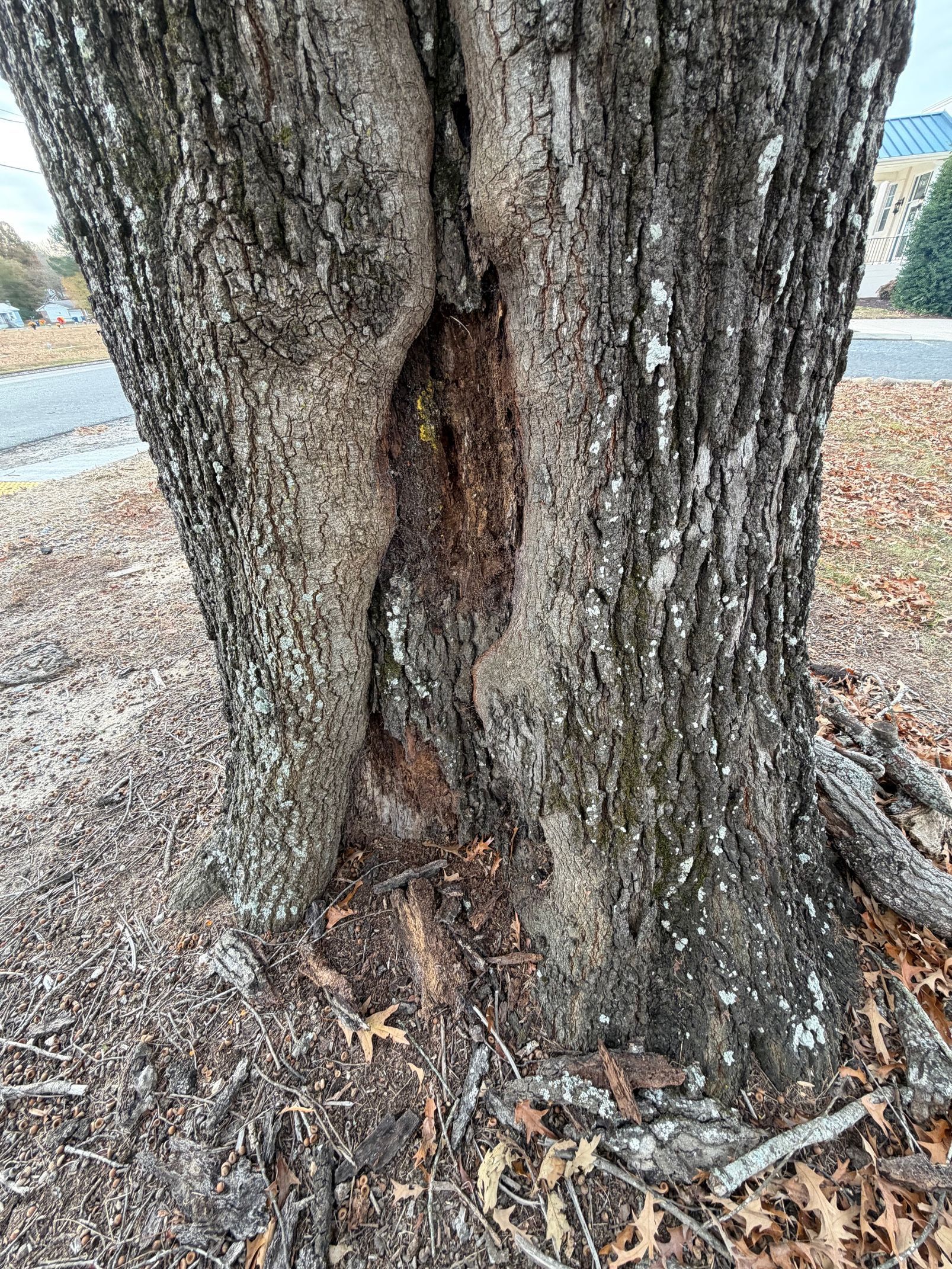
- Vertical cracks running down the trunk
- Hollow areas or visible cavities
- Mushrooms or fungal growth near the base
- Soft or decaying wood
These signs often indicate internal rot. A tree can appear healthy on the outside while being severely compromised internally.
When the trunk structure weakens, the tree can fail suddenly.
4. Root Damage or Soil Disturbance
Roots anchor the entire tree.
Serious concerns include:
- Major roots cut during construction
- Soil heaving or lifting around the base
- Signs of root rot
- A tree shifting after heavy rainfall
In areas with clay-heavy soil, saturated ground combined with compromised roots dramatically increases the risk of uprooting.
Root failure is one of the most common causes of storm-related tree collapse.
5. The Tree Is Fully Dead
A dead tree becomes brittle over time.
Common signs include:
- No leaf growth in spring or summer
- Extensive bark loss
- Brittle branches that snap easily
- No green tissue under the bark when lightly scratched
Dead trees do not recover. As they dry out, they become more unpredictable and more likely to fail during storms.
If a dead tree is within striking distance of your home, removal should be prioritized.
Why Immediate Removal Matters
Waiting too long can result in:
- Compromising your family’s safety
- Property Damage
- Power line impact
- Costly insurance claims
Emergency removals are often more complex and expensive than proactive removals. Addressing hazardous trees early protects your property and gives you peace of mind.
How We Evaluate Trees Professionally
When we assess a tree, we look at:
- Structural integrity
- Root stability
- Canopy balance
- Disease indicators
- Proximity to structures
Not every questionable tree requires removal. Sometimes trimming, structural pruning, or monitoring is sufficient. But when safety is compromised, we will clearly explain why removal is the responsible recommendation.
As a fully insured professional tree service company serving homeowners throughout North Carolina, our priority is protecting your property while preserving healthy trees whenever possible.
If You’re Unsure, Have It Evaluated
Many homeowners wait until after a storm to act. The safer approach is to evaluate risk before severe weather arrives.
If you’ve noticed any of these warning signs, it’s worth having a professional inspection.
Healthy trees increase property value. Hazardous trees put it at risk. If you would like a professional assessment,
contact Unlimited Tree Service for a free estimate and evaluation today, don't wait!