October 23, 2026
Trees add shade, beauty, and value to your property. But like anything else around your home, they need attention from time to time. Dead branches, damaged limbs, crowded growth, and branches growing too close to your house can all become problems if left unchecked.
The tricky part is that not every tree problem is obvious from the ground. A tree may look perfectly healthy from the driveway while hiding a cracked limb, a weak branch union, or signs of decay higher in the canopy.
Regular tree trimming can help address these concerns before they turn into bigger problems. At Unlimited Tree Service, we believe good tree care starts with understanding what a tree needs, identifying potential hazards, and making the right cuts for the situation.
1. Remove Dead, Damaged, and Hazardous Branches
Dead branches don’t always fall when you expect them to. Some hang in the canopy for months or even years before wind, rain, or ice brings them down.
A dead or damaged limb hanging over your driveway, front porch, parking area, or anywhere people regularly walk deserves attention. The same goes for large branches with cracks, broken attachments, or other signs of weakness.
Removing hazardous branches can reduce the chance of damage to your home, vehicles, and surrounding property. It also eliminates the danger of those limbs falling unexpectedly.
Of course, not every dead branch poses the same level of risk. Its size, location, condition, and what lies beneath it all matter. That’s why an assessment is important before deciding what needs to be removed.
2. Address Weak Branches and Structural Problems
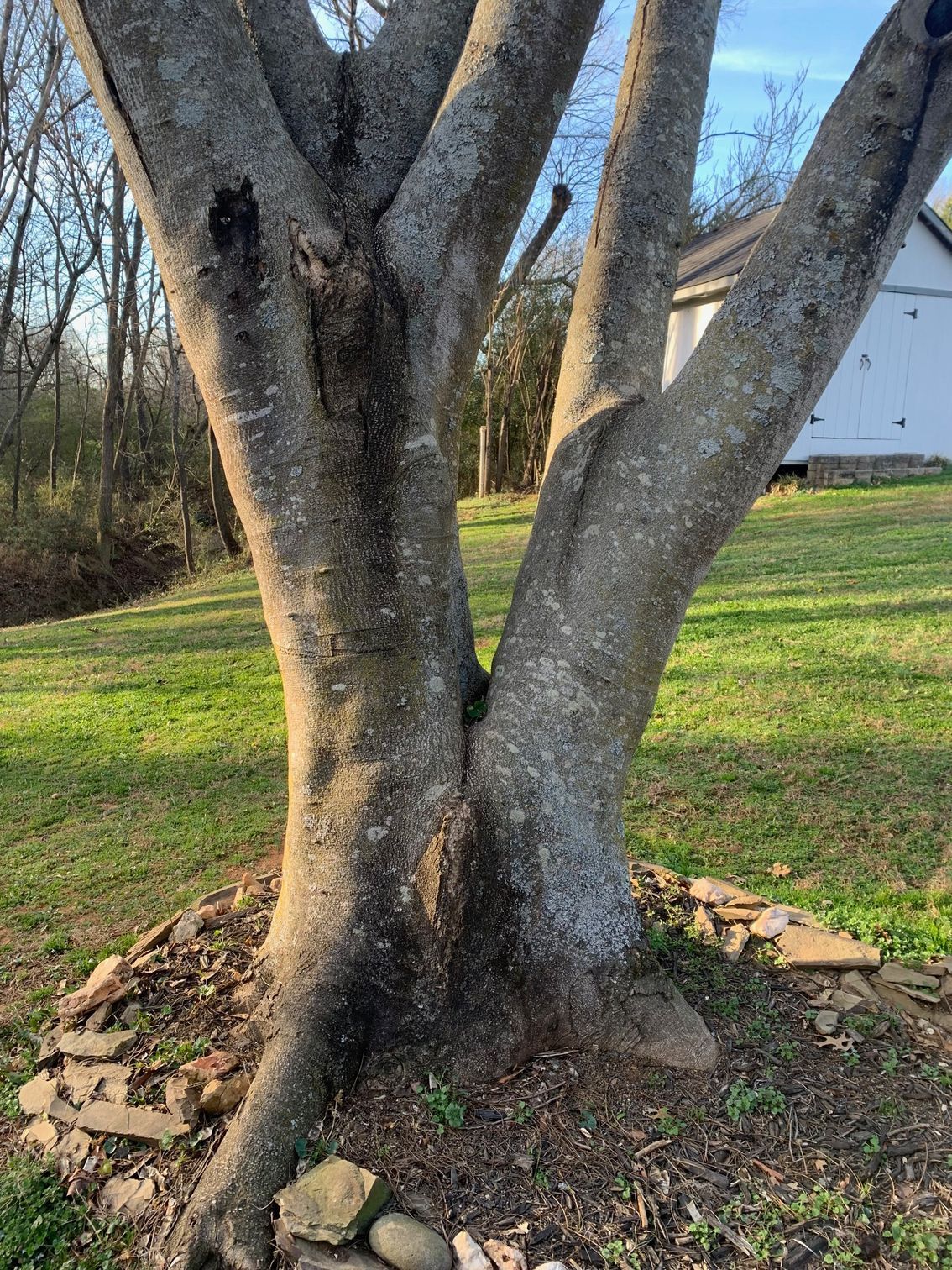
Have you ever noticed two large branches growing almost side by side, competing for space? Or a tree that has several large stems coming from the same point on the trunk?
These growth patterns can sometimes create weak attachments, especially when bark becomes trapped between adjoining stems. Arborists call this included bark. As the tree grows, the union may become more susceptible to splitting.
Crossing branches, cracked unions, and limbs with excessive weight toward their ends can also deserve a closer look.
Selective pruning can sometimes improve a tree’s structure by reducing competition between branches or addressing specific weaknesses. However, tree trimming cannot fix every structural problem, and removing too much growth can actually make a tree more vulnerable.
The goal is to make appropriate cuts while preserving as much healthy growth as possible. Every tree is different, so the right approach depends on its condition, structure, and location.
3. Give Your Trees Room to Grow
Trees change as they mature. Branches that once cleared your roof may eventually reach the gutters. Limbs that were nowhere near your driveway may begin hanging over vehicles. And a canopy that looked balanced years ago may now be crowded or uneven.
Tree scale plays a role in how much space a canopy will ultimately demand. According to The Spruce, medium trees are typically 10 to 20 feet tall, while extra-large trees like cottonwoods can exceed heights of 50 feet. Proper pruning can help manage that growth while maintaining the tree’s natural shape.
Removing selected branches that rub against one another can also prevent repeated damage to the bark. Opening up a crowded canopy may improve light penetration, depending on the tree and its existing structure.
More tree trimming doesn’t mean better trimming, though. Removing too much of a tree’s live canopy can stress it and interfere with its ability to produce food. The objective is not to cut a tree back as far as possible. It’s to make the cuts that serve a purpose.
4. Recognize Signs of Tree Health Problems
Sometimes, the best reason to have your trees looked at is that something just doesn’t seem right.
Maybe the top of the tree is losing leaves before the rest of the canopy. Perhaps you notice mushrooms near the base, a cavity in the trunk, unusual bark damage, or a growing number of dead branches.
Other warning signs can include cracks in the trunk, damaged roots, changes in the lean of a tree, or large areas of missing bark.
These signs don’t automatically mean a tree needs to come down. Some problems can be managed, while others may indicate a more serious concern. The important thing is figuring out what is happening before making a decision.
Pruning can remove dead or damaged branches, but it will not cure every disease or correct decay inside a trunk. A closer assessment may be necessary to determine whether tree trimming, additional monitoring, or removal is the most appropriate option.
5. Keep Branches Away From Your Home and Other Structures
Trees and homes can coexist beautifully, but sometimes a little space is necessary.
Branches rubbing against your roof can damage shingles or other roofing materials. Limbs hanging over a house may drop debris into gutters, and branches near windows, fences, garages, or driveways can become a problem as they grow.
Pruning can help maintain appropriate clearance around buildings and other structures without unnecessarily changing the tree’s appearance.
Utility lines require special care. Never attempt to cut branches that are touching or growing close to power lines yourself. These situations can be extremely dangerous and may require the utility company or specially qualified line-clearance professionals.
If you have branches growing too close to your home or other structures, having them evaluated can help you determine what needs attention and what can safely remain.
6. Improve Your Property’s Appearance Without Overdoing It
A well-maintained tree can be one of the best features of a property. Healthy canopies provide shade, frame a home, and make outdoor spaces more enjoyable.
On the other hand, broken limbs, excessive deadwood, and poorly positioned branches can make a tree look neglected.
Proper pruning can improve a tree’s appearance while preserving its natural form. It can also help keep branches from interfering with driveways, walkways, and other frequently used areas.
Sometimes, however, tree trimming isn’t the best answer. A tree planted in a space that has become too small for it may continually conflict with a house, fence, driveway, or other structures. In those situations, removal may be worth considering.
The right decision comes down to the individual tree, its condition, its location, and the homeowner’s goals.
When Should You Have Your Trees Assessed?
You don’t have to wait until a branch falls or a storm causes damage to have your trees checked.
Consider scheduling an assessment if you notice:
* Large dead or broken branches.
* Cracks where major branches meet the trunk.
* A sudden change in the tree’s lean.
* Mushrooms growing on the trunk or near the base.
* Significant dieback or changes in the canopy.
* Branches hanging over your home, driveway, or other areas where people gather.
* Root damage or changes around the base of the tree.
These signs don’t all mean a tree is dangerous, but they are good reasons to take a closer look.
It’s also worth remembering that even a healthy tree can lose a branch during severe weather. Routine maintenance can address certain foreseeable hazards, but no amount of tree trimming can guarantee that a tree will never fail.
Need Tree Trimming in Mount Gilead, NC, or the Surrounding Area?
At Unlimited Tree Service, we work with homeowners to address tree concerns, remove hazardous limbs, improve clearance, and determine when trimming or removal makes the most sense.
We know that every property is different. Sometimes a few carefully selected cuts are all that’s needed. Other times, a closer look reveals a problem that deserves more attention.
Whether you have branches growing over your roof, deadwood in the canopy, or a tree you’re simply concerned about, we’re here to help you understand your options.
Don’t wait for a problem branch to become an emergency. Contact Unlimited Tree Service to schedule an assessment and discuss the best way to care for the trees on your property.
Call or text 336-465-9587 to get started.